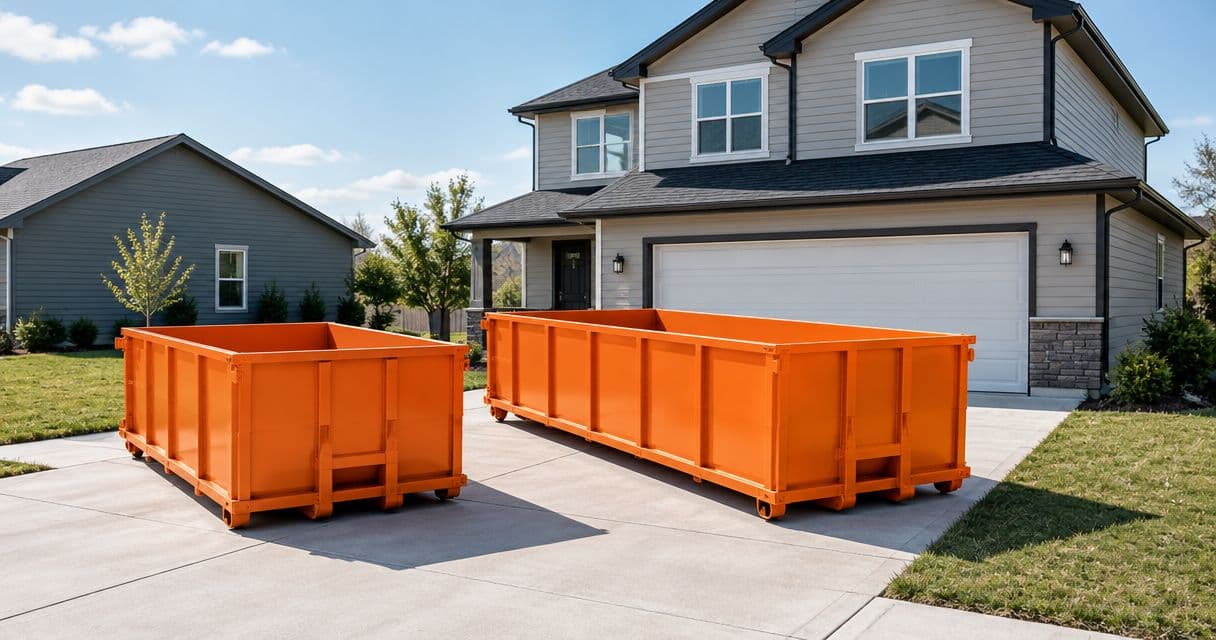
Choose a 15 yard dumpster rental when your debris fits within 15 cubic yards and meets the rental’s material and weight restrictions; size up to 20 yards when you need more volume, not simply because the job sounds large. A 20-yard container adds 5 cubic yards of nominal capacity, but that extra space does not establish a higher weight allowance or permission to load above the fill line.
- A 15 yard dumpster rental suits debris loads that fit within its volume, weight allowance, and loading restrictions.
- A 20-yard dumpster provides 5 cubic yards more nominal capacity than a 15-yard dumpster.
- Underdog Dumpster serves homeowners and contractors seeking flat-rate roll-off dumpster rentals in Clarksville and surrounding areas.
- Confirm accepted materials, weight allowance, rental period, extra fees, and delivery timing before booking.
Why this matters
The wrong size creates two different problems: unused space or debris that cannot safely fit. Neither problem is solved by choosing a dumpster from the number of rooms you plan to clear.
Underdog Dumpster is best for Clarksville homeowners and contractors seeking flat-rate roll-off dumpster rentals. You can start with Underdog Dumpster and confirm the container size against your actual debris, including projects in Sango.
For a 2026 rental, compare the flat rate alongside the stated extra-fee conditions. Online booking is available 24/7; delivery hours and the same-day delivery cutoff are separate details to confirm before scheduling your crew or cleanout.
15 vs 20 yard dumpster: when should you size up?
Size up when the estimated loose debris exceeds 15 cubic yards, or when bulky items make that capacity insufficient. Keep the smaller container when the load fits, the materials are accepted, and the applicable weight allowance covers the job.
The size label describes nominal volume. It does not tell you the container’s exterior dimensions, included disposal weight, rental period, or loading restrictions.
| Size option | Nominal volume | Equivalent volume | Best for | Main advantage | Main limitation |
|---|---|---|---|---|---|
| 15-yard dumpster | 15 cubic yards | 405 cubic feet | Loads that fit within the smaller container’s confirmed limits | Avoids choosing extra volume you do not need | Less room for bulky debris and changes in scope |
| 20-yard dumpster | 20 cubic yards | 540 cubic feet | Loads needing more space than 15 cubic yards provides | Adds 5 cubic yards of nominal capacity | Extra volume does not establish a higher weight allowance |
One cubic yard equals 27 cubic feet. That makes the volume difference 135 cubic feet, but usable loading space still depends on the container’s shape, the debris, and the permitted fill level.
Use these conversions for planning, not as a promise that every item will pack tightly. A couch, cabinet, or irregular demolition piece creates gaps that a volume calculation alone does not capture.
15-yard dumpster: 405 cubic feet of nominal volume
Best for: a defined debris load that fits within 15 cubic yards and the confirmed weight allowance. A 15-yard dumpster gives you 405 cubic feet of nominal volume without requiring you to choose the larger option automatically.
Start with the material you will actually discard. For a homeowner, that means separating items being kept, donated, or moved elsewhere; for a contractor, it means identifying which demolition materials belong in this particular waste stream.
The benefit is a size decision based on the job rather than a broad label such as garage cleanout or bathroom remodel. Those labels describe work, not debris volume.
The limitation is space for changes. If the scope expands after loading starts, the smaller container has less capacity to absorb additional bulky material.
For your 2026 project, choose a 15-yard container only after checking both volume and weight. A load that fits by volume can still exceed its weight allowance.
20-yard dumpster: 540 cubic feet of nominal volume
Best for: debris that needs more than 15 cubic yards of space while remaining within the larger rental’s confirmed restrictions. A 20-yard dumpster provides 540 cubic feet of nominal volume.
Its advantage is additional room: 5 cubic yards beyond the smaller option. That space helps when your estimate includes bulky pieces, irregular shapes, or a documented addition to the original scope.
Its limitation is that size alone answers only the volume question. Do not assume a 20-yard container accepts different materials, includes more weight, or fits the same placement area as another container.
Ask for the actual exterior dimensions and loading requirements before choosing it. The larger capacity is useful only when the container can be placed, accessed, loaded, and collected as required.
Choose 20 yards for a volume problem; get material-specific instructions for a weight problem. Moving to a larger container is not a substitute for those instructions.
Why your dumpster size choice varies
The right choice changes with the debris and the site, not just the project name. Use these factors to explain your job clearly when requesting a rental:
- Debris volume: Estimate the loose material you will discard, rather than the floor area of the room being renovated.
- Debris weight: Dense material requires a weight check even when the pile looks small.
- Bulky items: Furniture and irregular pieces leave gaps, so their outside dimensions matter.
- Material restrictions: Confirm acceptance before including any questionable material in your planned load.
- Placement and access: Check the actual container dimensions, loading access, and truck approach requirements.
- Project scope: Include known additional work before booking instead of treating it as spare capacity later.
For Clarksville and Sango projects in 2026, give the rental provider the same description you give your crew. If one person describes a furniture cleanout and another expects demolition debris, the size discussion starts from different assumptions.
How do you estimate the debris before booking?
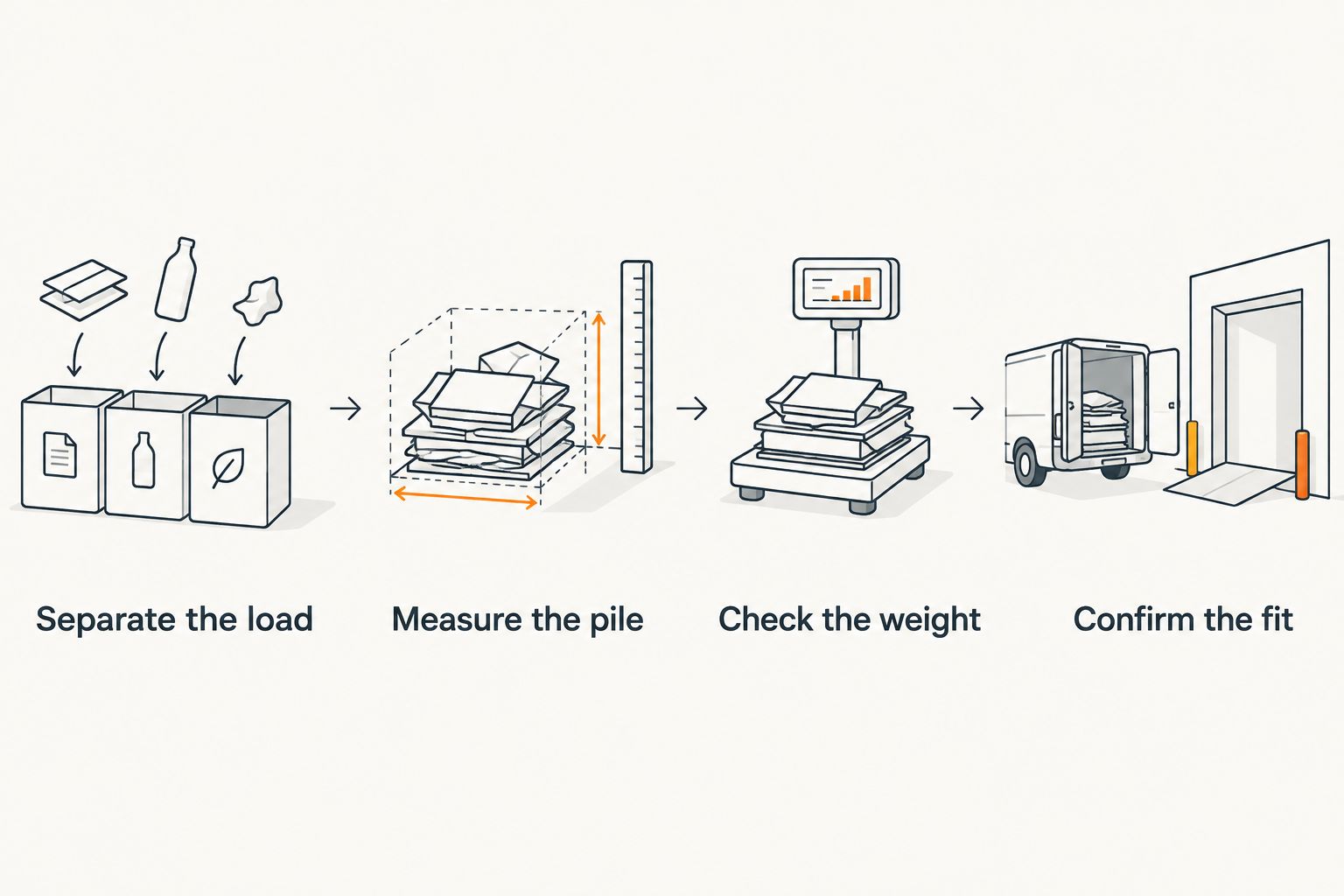
Separate the load
Make a list of what leaves the property. Group bulky objects separately from loose debris, and identify dense materials that need a specific acceptance and weight discussion.
Do not count everything currently in a room as waste. Equally, do not leave out material already removed and stored elsewhere on the property.
Measure the pile
For an approximately rectangular pile, multiply its length, width, and height in feet, then divide by 27 to estimate cubic yards. Measure the debris pile, not the room that produced it.
This is a rough volume estimate. Irregular shapes, empty spaces, and the way material settles limit its precision, so photographs and a clear material list help explain what the calculation misses.
Check the weight
Ask which weight allowance applies to the selected rental and how excess weight is handled. Describe the material explicitly rather than asking only whether the container is big enough.
For dense debris such as concrete, brick, dirt, or roofing material, request material-specific loading instructions. Do not assume acceptance or a permitted loading depth from the container’s size.
Confirm the fit
Ask for the container’s exterior dimensions and the access needed for delivery and collection. Check overhead obstructions, the truck approach, and whether you can reach the loading area throughout the project.
If placement would involve a street or other public space, check the applicable local requirements before arranging delivery. Do not assume a residential address makes every placement acceptable.
Once those checks are complete, compare your estimated volume with the smaller container’s limits. If the debris does not fit within them, ask about the larger option rather than planning to stack above the permitted fill level.
What should you confirm besides container size?
A useful 2026 rental comparison identifies what the flat rate covers and what triggers an additional charge. Do not compare container volume while leaving the rental terms undefined.
Ask for a clear answer to each of these questions:
- What rental period is included, and what happens if the project runs longer?
- What weight allowance applies to this material and container?
- Which materials are prohibited or require separate arrangements?
- What fill level and loading rules apply?
- Which conditions trigger additional fees, and how are those fees calculated?
- What delivery window and same-day cutoff apply to the requested date?
- What must remain clear for pickup, and how is collection arranged?
These are questions to settle before paying, not assumptions about a provider’s policies. A flat rate and clearly stated extra-fee conditions belong in the same comparison.
Underdog Dumpster offers flat-rate roll-off dumpster rentals for homeowners and contractors. Use online booking when convenient, but confirm delivery timing separately; round-the-clock ordering does not mean round-the-clock delivery.
Choose your dumpster rental
Match your debris volume to a container, then confirm weight limits, rental terms, and delivery timing.
Is a 20-yard dumpster much bigger than a 15-yard dumpster?
A 20-yard dumpster adds 5 cubic yards of nominal volume compared with a 15-yard dumpster. That equals 135 cubic feet of additional capacity.
The capacity labels do not establish the exterior length, width, or wall height. Request those measurements before deciding whether either container suits your driveway and loading method.
Can a 15-yard dumpster handle a remodel?
A 15-yard dumpster provides 15 cubic yards of nominal capacity, but the remodel’s debris determines whether it fits. Room count alone does not identify the amount or weight of material being removed.
List the cabinets, fixtures, flooring, packaging, and demolition debris actually being discarded. Confirm acceptance and weight restrictions for that list before choosing the container.
Should you size up just to be safe?
The extra 5 cubic yards in a 20-yard container is useful when your estimate identifies a volume shortfall. It is not a reason to skip measurement or ignore weight restrictions.
If the uncertainty concerns dense material rather than space, resolve the loading instructions first. If the uncertainty concerns additional work, define that work before choosing the size.
FAQ
What's the main difference between a 15-yard and a 20-yard dumpster?
A 20-yard dumpster has 5 cubic yards more nominal capacity than a 15-yard dumpster. That is 135 cubic feet of additional volume; weight allowances and exterior dimensions must be confirmed separately.
Is a 15 yard dumpster rental enough for a home cleanout?
A 15 yard dumpster rental is enough when the discarded items fit within its volume, weight allowance, and loading rules. Estimate the actual debris rather than using the number of rooms as the deciding factor.
Does a 20-yard dumpster automatically include more disposal weight?
A 20-yard capacity label does not establish the included disposal weight. Ask for the weight allowance attached to the specific rental and material.
Can I fill a dumpster above the top if everything fits?
Follow the provider's stated fill line and loading restrictions rather than stacking debris above the permitted level. Choose a larger container or ask about another removal arrangement when the load will not fit.
How do I calculate cubic yards for dumpster debris?
Multiply an approximately rectangular debris pile's length, width, and height in feet, then divide by 27. Treat the result as an estimate because irregular items and gaps affect how the load fits.
Can I book a dumpster online at night in Clarksville?
Underdog Dumpster offers online booking 24/7. Booking access is separate from delivery hours, so confirm the delivery window and same-day cutoff for your project.
What should I check before booking a dumpster in Sango?
Confirm debris volume, accepted materials, weight allowance, rental period, extra-fee conditions, and placement requirements. Check the delivery timing separately from the time you submit an online booking.
One last thing
Before your 2026 delivery, photograph the debris and the proposed placement area. Use those photos to explain bulky pieces, dense material, access constraints, and anything your volume estimate leaves unclear.
Size by the debris, then verify the terms. A 15-yard container that fits the complete load is the right choice; a 20-yard container earns its place when the extra volume solves a specific problem.