
A single overweight fee from a mixed debris load can wipe out your profit margin on a Clarksville remodel before the drywall is even hung. You already know that a cluttered job site is more than an eyesore; it’s a safety hazard that stalls your sub-contractors and eats your billable hours. Effective construction site waste management is a profit-protection strategy, not just a cleanup task. It is the difference between a project that stays on schedule and one that gets buried under logistical bottlenecks and unexpected disposal penalties.
This comprehensive checklist helps you master site efficiency and avoid costly disposal delays with a clear, no-nonsense plan. We understand the pressure of keeping a site clean while managing Montgomery County’s specific disposal regulations and Bi-County landfill fees. You’ll learn how to organize debris categories, optimize your dumpster footprint, and streamline swap-outs to keep your crew moving. By following these practical steps, you can secure a safer job site, faster project completion, and predictable flat-rate disposal costs that keep your budget intact from the first load to the final inspection.
Key Takeaways
- Learn how a systematic waste plan protects your profit margins and ensures site safety.
- Discover how to designate a level, accessible Waste Zone to avoid delivery delays and site damage.
- Master the core principles of construction site waste management by segregating heavy debris into smaller containers to prevent weight overages.
- Get practical tips for managing subcontractors through clear signage and site orientations.
- Leverage flat-rate pricing and appropriate roll-off sizing to maintain project momentum while keeping your budget predictable.
Why Construction Site Waste Management Matters for Your Bottom Line
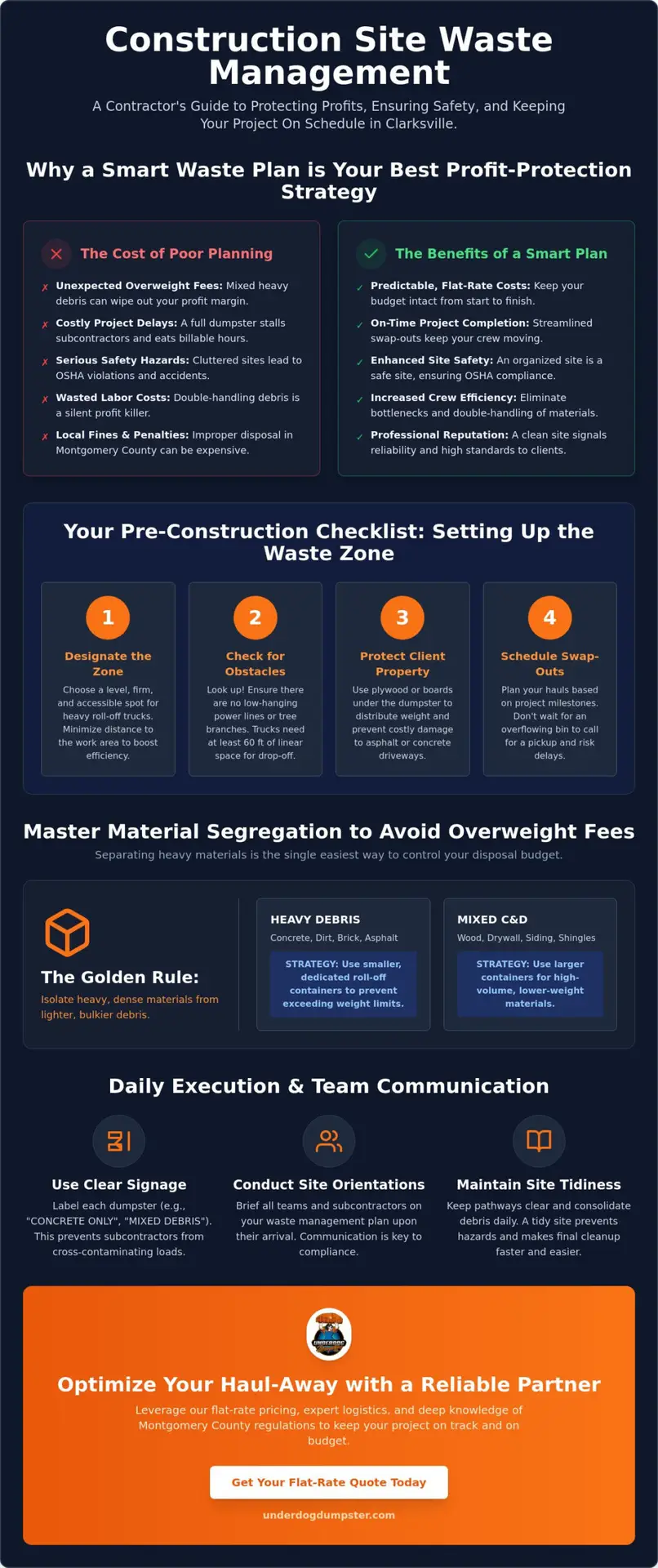
Effective construction site waste management is the systematic control of debris from the moment it hits the ground until the final haul-away. It isn't just about throwing trash in a bin; it's a critical logistics strategy that impacts every phase of your build. When you treat waste as an afterthought, you're essentially planning for chaos. A clean, organized site allows your crew to work without obstruction and ensures your subcontractors can move in and out according to schedule.
Safety and OSHA compliance are directly tied to how you handle your site's refuse. Piles of Demolition waste left in high-traffic zones create tripping hazards and fire risks that can shut down a project in hours. Beyond safety, your reputation in Clarksville depends on site cleanliness. Neighbors and potential clients judge your professionalism by how you treat the job site. A cluttered, messy project sends a message of poor management; a tidy one signals reliability and high standards.
Financial protection is perhaps the biggest motivator. Material segregation prevents expensive mixed-load fees or overweight penalties. With Bi-County Solid Waste Management charging specific rates for demolition loads, tossing heavy concrete in with light wood scrap can lead to surprise costs at the scale. Keeping your debris separated and your bins right-sized is the easiest way to keep your budget predictable.
The Real Cost of Poor Planning
Double-handling materials is a silent profit killer. If your team has to move the same pile of scrap wood three times because it's blocking an access point, you're paying for labor that adds zero value to the project. Site bottlenecks occur when full dumpsters aren't swapped quickly, stalling production for hours. These delays ripple through your timeline, causing missed deadlines and frustrated clients. In Montgomery County, improper debris storage can also lead to local fines that further erode your margins.
Compliance and Local Requirements
Meeting Montgomery County disposal regulations is a baseline requirement for any professional contractor. For larger commercial bids in Clarksville, a formal construction site waste management plan is often mandatory. The first step in any successful plan is identifying materials before work begins. Spotting hazardous items like asbestos or lead early ensures you're following legal disposal protocols and protecting your crew's health. For reliable logistics that keep you compliant, partnering with a local expert like Underdog Dumpster ensures your waste is handled efficiently and transparently.
Pre-Construction Checklist: Setting Up Your Waste Zone
Before the first hammer swing, you must designate a specific Waste Zone. This isn't just about finding an empty corner. It's about logistics. Your construction site waste management strategy starts here. The zone needs to be accessible for heavy roll-off trucks and situated to minimize crew downtime. If your waste zone is 200 feet from the actual work area, your workers will spend more time walking than building. Efficiency is the goal.
Evaluate the terrain carefully. The drop-off point needs to be level and firm. A significant slope can cause the container to shift or make it impossible for the hoist to safely set it down. You also need to look up. Tree branches and power lines are common obstacles in older Clarksville neighborhoods. Protecting the client's property is equally vital. Asphalt and concrete can crack under the pressure of a loaded 25-yard dumpster. Use plywood or specialized boards to distribute the weight and avoid costly repairs. If you are unsure about the best location on a tight site, reach out to our team for a quick logistical consultation.
According to the EPA's report on the Sustainable Management of C&D Materials, the U.S. generated 600 million tons of debris in 2018 alone. Managing your portion of that volume requires a clear schedule for swap-outs. Don't wait until the bin is overflowing to call for a haul-away. Overfilled bins are safety hazards and often lead to delays when the truck arrives. Plan your swaps based on your project milestones to keep the momentum going.
Dumpster Siting and Access
Trucks need space to breathe. A standard roll-off truck requires at least 60 feet of linear space to drop or pick up a container. Check for low-hanging power lines or tree branches that might obstruct the truck’s hoist during operation. To see how experts manage these specific overhead challenges, you can discover CDA TREE AND UTILITY and their specialized approach to tree and utility safety. You should also verify that the site can support the weight of a fully loaded 20-yard or 25-yard dumpster without the tires sinking into the mud or damaging underground utilities.
Permitting and Neighborhood Logistics
Check with your Clarksville neighborhood or HOA for specific rules regarding dumpster placement before the truck arrives. If you must place a roll-off container on a public right-of-way or city street, you are required to obtain a street permit from the local municipality. Consider site security as well. A simple tarp or a temporary fence can prevent unauthorized dumping from passersby, ensuring you don't pay for someone else's trash.
Material Segregation & Right-Sizing Your Roll-Off Containers
Effective construction site waste management relies on one simple rule: treat different materials differently. You shouldn't toss heavy concrete into the same bin as light framing scraps. Heavy debris, which includes concrete, brick, dirt, and asphalt, has a high density that adds up fast. If you fill a 25-yard bin with these materials, the truck won't be able to lift it safely. Even if it could, you'd likely exceed legal road weight limits and incur massive penalties. For these heavy loads, stick to 10-yard or 15-yard dumpsters. They provide enough space for the weight while keeping you within safe operating limits.
Bulky, light materials require a different approach. Drywall, wood scraps, and cardboard take up significant volume but weigh much less per cubic yard. Using a larger 20-yard or 25-yard container for these items allows you to maximize each haul and reduce the frequency of swap-outs. This keeps your site clear and your project moving. Don't forget to set aside high-value scrap. Separating copper and aluminum into their own bins or bags can help you recoup some costs at a local recycling center, further improving your project's bottom line.
Matching Container Size to Project Phase
Your waste needs will shift as the build progresses. During the demolition phase, you'll deal with high volumes of bulky debris, often requiring the largest available bins. Transitioning into framing and roofing usually means a steady stream of wood and shingle waste; 15-yard or 20-yard bins are typically the sweet spot here. By the finishing phase, your waste volume drops. Smaller 10-yard bins are often sufficient for drywall cutoffs and trim scraps. If you're working on a smaller remodel rather than a full build, learn more about residential dumpster rental in Clarksville to see how smaller containers fit your specific needs.
Avoiding Overweight Fees
Weight limits are non-negotiable. One of the best ways to stay compliant is the "fill line" rule. Never load debris above the top rim of the container. Overfilled bins create hazardous conditions for transport, as loose materials can spill onto Clarksville roads. To estimate weight before booking, consider that one cubic yard of mixed construction debris typically weighs about 350 pounds, while a cubic yard of concrete can weigh up to 4,000 pounds. Knowing these numbers helps you choose the right bin size from the start, ensuring your disposal costs stay flat and predictable.
On-Site Execution: Daily Logistics & Team Communication
A solid plan for construction site waste management only works if your team executes it every day. Execution starts with clear communication. Install high-visibility signage on every roll-off container. These signs should explicitly state which materials are allowed. If a bin is for "Wood Only," make sure it's impossible to miss. This simple step prevents the contamination of loads and helps you avoid the mixed-debris penalties mentioned earlier.
Integrate these waste rules into your subcontractor site orientation. Every person who steps onto the job site needs to know where the waste zone is and how to use it. Don't assume they know your protocol. Assign a "Waste Captain" to lead this effort. This person monitors bin levels throughout the day and knows exactly when to call for a swap-out. They serve as the primary point of contact for the haul-away driver, ensuring the site is ready for a quick and safe exchange.
Daily site walk-throughs are non-negotiable. Spend ten minutes at the end of each shift checking the debris area. Are the bins being loaded efficiently? Is the perimeter clear? Catching a loading error early is much easier than digging out a 20-yard dumpster to find a hidden piece of hazardous waste. If you need a partner who understands the pace of a Clarksville job site, schedule your next roll-off swap with us today to keep your project moving.
Subcontractor Accountability
Your waste management expectations should be part of your written subcontractor agreements. When expectations are in writing, accountability follows. Establish a strict "no-pile" rule. All debris must go directly into the dumpster. Piles on the ground represent wasted labor and increased injury risks. Be clear about the consequences of contamination. If a subcontractor tosses trash into a recycling-specific bin, they should be responsible for the resulting fees or the labor time spent re-sorting the material.
Efficient Loading Techniques
How you load the container matters as much as what goes inside. Place heavy items at the bottom and distribute the weight evenly across the entire length of the bin. An uneven load is dangerous to transport and can cause the truck to tilt during pickup. Break down large items like pallets, furniture, or bulky framing sections to maximize every inch of available space. Finally, keep the area around the dumpster clear. The driver needs a clean path to hook and lift the container without damaging your equipment or the client's property.
Optimizing Your Haul-Away with Underdog Dumpster
Mastering construction site waste management requires more than just a solid checklist. It requires a disposal partner who values your project's timeline as much as you do. Underdog Dumpster provides the logistical backbone for your site's cleanup. We focus on transparency and speed to ensure your crew never waits around for an empty bin. By choosing a local provider, you avoid the communication breakdowns common with national brokers who don't know the specific traffic patterns of Sango or the landfill hours in Woodlawn.
Our flat-rate pricing model is designed for contractors who need to protect their margins. You know exactly what you're paying upfront. This eliminates the "hidden fee" anxiety often associated with mixed loads or unexpected weight overages. When your designated Waste Captain identifies a full bin, our same-day delivery and pickup options keep your momentum high. We know that a stalled site is a losing site. Our team handles the heavy lifting of the final haul-away to local facilities like the Bi-County landfill, allowing you to stay focused on the build.
We've embraced modern digital tools to make your job easier. You don't have time for long phone tag sessions or complicated paperwork. Our streamlined online booking system allows you to select your container size, schedule a drop-off, and manage your rentals from any mobile device on the job site. It’s a tech-forward approach to a "boots-on-the-ground" industry, designed to minimize friction and maximize your billable hours.
The Local Advantage in Clarksville
National brokers often promise the world but fail to deliver when local logistics get complicated. We live and work in this community. We know the Clarksville streets and the specific challenges of navigating tight residential job sites or busy commercial zones. Our service is professional and no-nonsense. We show up on time, drop the bin exactly where you need it, and keep our communication direct. Ready to clear your site? Book your construction dumpster online today.
Flexible Solutions for Every Project
Every job has a different footprint. We offer 10-Yard, 15-Yard, 20-Yard, and 25-Yard Roll-Off Dumpster Rentals to ensure you have the right capacity without paying for unused space. Whether you're a commercial developer breaking ground on a new subdivision or a residential contractor handling a kitchen remodel, our fleet is ready to support your workflow. We bridge the gap between heavy-duty commercial needs and approachable residential service with a single, streamlined process that keeps your site clean and your project on schedule.
Take Control of Your Site Logistics Today
Mastering construction site waste management isn't just a matter of convenience; it’s a proven method for protecting your project’s profit margins. By establishing a dedicated waste zone and segregating materials into right-sized containers, you eliminate the safety hazards and overweight fees that stall progress. These logistical wins add up to faster project completion and a professional reputation that helps you win more bids in Montgomery County. A clean site is a productive site, and a productive site is a profitable one.
You don't have to manage the haul-away alone. Underdog Dumpster is locally owned and operated right here in Clarksville, offering the reliability you need on a busy job site. We provide flat-rate pricing with no hidden fees and offer same-day delivery to keep your workflow uninterrupted. Our team understands the pace of local construction and is ready to act as your dependable logistics partner. View Available Dumpster Sizes and Book Online to secure your next roll-off. Let’s get your site organized and your build moving today.
Frequently Asked Questions
What is the most efficient way to manage construction waste?
The most efficient method is to implement a construction site waste management plan that prioritizes material segregation at the source. By separating heavy debris from light scrap, you prevent site bottlenecks and ensure each load stays under weight limits. This approach reduces the need for re-sorting and minimizes double-handling of materials. Keeping a clean site also improves safety and allows subcontractors to work faster without navigating around piles of refuse.
Do I need a permit for a construction dumpster in Clarksville?
You generally don't need a permit if the dumpster is placed entirely on private property, such as a driveway or a construction site. However, Clarksville regulations require a permit if the container sits on a public street or right-of-way. Always check with the local building department or your HOA before delivery to avoid fines. Planning for proper placement during the pre-construction phase ensures you stay compliant with municipal rules.
What materials are not allowed in a construction dumpster?
Hazardous waste, liquids, and certain prohibited items like tires or car batteries cannot go into a standard construction dumpster. For projects with heavy rubber debris, utilizing a specialist like Tired Tyres ensures these items are disposed of responsibly. This includes materials like asbestos, lead-based paint, and Freon-containing appliances. Tossing these items into a roll-off can lead to significant fines or the rejection of the entire load at the landfill. If you're unsure about a specific material, it's best to ask your provider before loading it into the bin.
How do I choose the right dumpster size for a roofing project?
Choosing the right size for a roofing project depends on the number of squares of shingles you're removing. A 15-yard or 20-yard dumpster is typically sufficient for most residential roofing jobs. Remember that shingles are heavy; a 20-yard bin filled with multiple layers of shingles can quickly approach weight limits. Distribute the weight evenly and never fill the container past the top rim to ensure a safe haul-away.
Can I put concrete and brick in a standard roll-off container?
You can put concrete and brick in a roll-off container, but you must use a smaller 10-yard or 15-yard bin. These heavy debris materials add up in weight very quickly. Filling a larger 25-yard bin with concrete would make it too heavy for the truck to lift safely. Sticking to smaller sizes ensures you stay within legal road weight limits and avoids the expensive overweight penalties often associated with dense masonry waste.
How much does construction site waste management cost?
The cost of construction site waste management varies based on the dumpster size you choose and the weight of the debris. Opting for flat-rate pricing is the best way to keep your budget predictable. This type of pricing usually covers the delivery, a set rental period, and the final haul-away. It's a transparent way to manage project expenses without worrying about hidden administrative fees or fluctuating disposal costs at the scale.
What is the difference between a 10-yard and a 20-yard dumpster for construction?
The primary difference is the volume and the type of material each bin handles best. A 10-yard dumpster is ideal for heavy, dense materials like dirt or concrete. A 20-yard dumpster offers double the volume, making it better for bulky but lighter items like framing lumber, drywall, and cardboard. Choosing the wrong size leads to either wasted space or hazardous overweight loads, so match the bin to your project's specific material density. If you are managing a project in a different metropolitan area, consulting a specialist for roll off dumpster rental Los Angeles can help you apply these same sizing principles to your local site.
How often should I schedule dumpster swap-outs on a busy site?
You should schedule swap-outs based on your project milestones rather than a set calendar date. On a busy site, monitor the fill line daily and call for a haul-away when the bin is about 75% full. This prevents overflows that create safety hazards and ensures you always have a fresh container ready for the next phase of work. Assigning a lead person to track these levels prevents site stalls and keeps the project momentum.